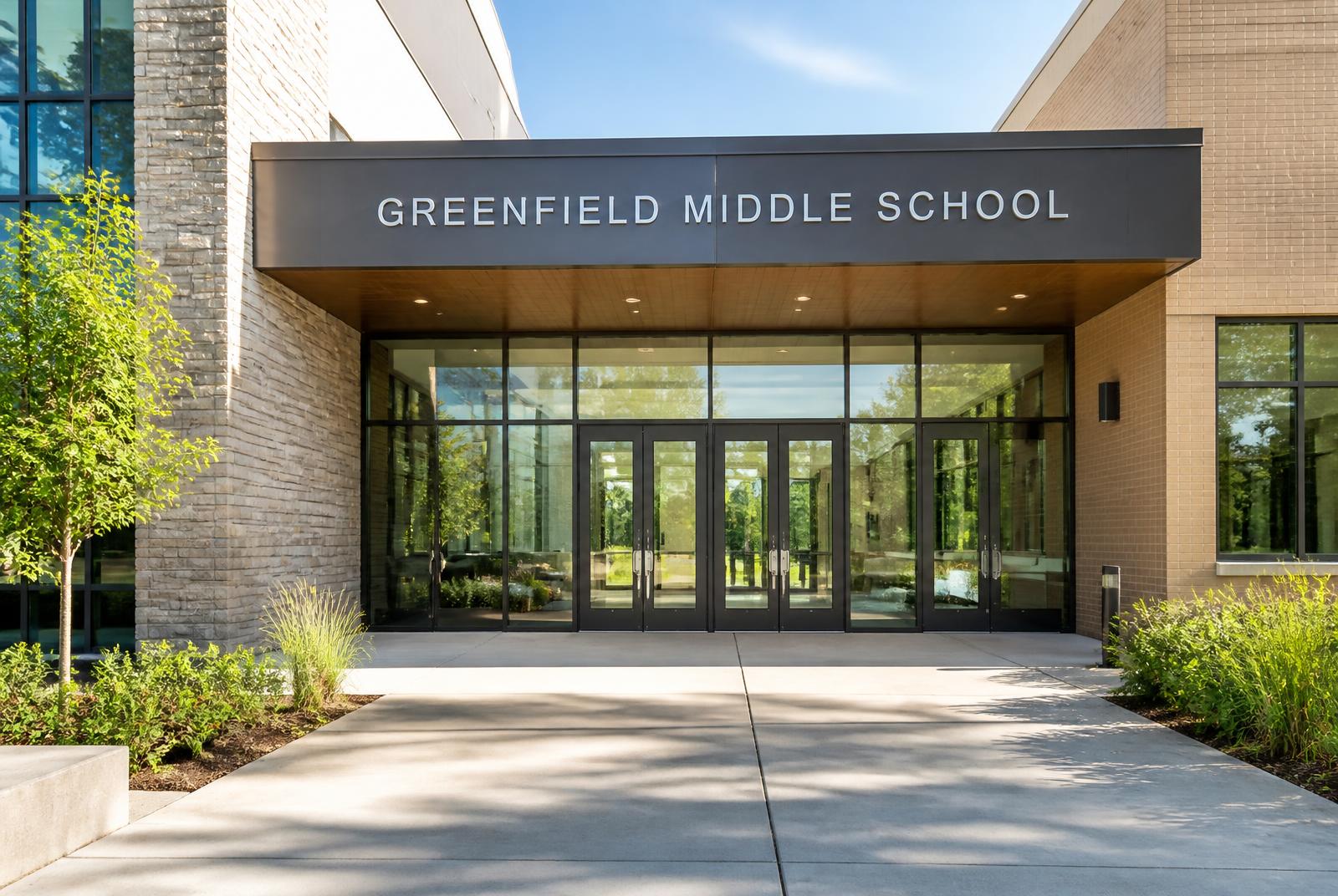
Schools & facilities
Window film for schools, districts and public facilities
Evaluate glass retention, solar comfort and privacy as part of your facility’s broader glazing plan. Film choice depends on the glass, frame and goals.
What does safety window film actually do on a campus?
Safety film is bonded to the interior face of the glass so that when a pane breaks, the fragments tend to stay together and remain in the opening. That reduces loose glass in occupied space and, where the filmed glass is also attached to the frame, can increase the resistance of the assembly and may delay entry. It is a mitigation layer within a broader safety plan — not a barrier, and not bullet-resistant.
Where teams start
Glazing locations districts typically review
A simplified plan of the openings that most often come up in a facility glazing review.
The assembly
Film alone versus film plus attachment
This distinction matters more than film thickness alone, and it's where a lot of proposals get vague.
Film bonded to the glass keeps fragments together. Tying that filmed glass to the frame — with structural sealant or a mechanical anchor — is what keeps the pane in the opening under sustained force. If a proposal promises forced-entry performance without specifying an attachment method, ask why.
Safety & security window film →How the glass-retention system works
Security film helps hold broken glass fragments together. A properly specified attachment system ties the filmed glass to the frame and may increase resistance compared with untreated glass.
The selected glass, film, frame and attachment configuration matters. Film alone doesn't make windows bulletproof or guarantee an entry-delay time; test results apply only to the configuration tested.
Beyond safety
Comfort and daylight matter too
Sun-exposed classroom windows may contribute to heat and screen glare. Compare comfort needs alongside the facility’s safety requirements.
Heat Rejection & Solar Control Film
Solar control film for rooms that never cool down
UV Protection Window Film
Reject ultraviolet light without changing how your glass looks
Glare Reduction Window Film
Keep the view. Lose the squint.
Privacy Window Film
Privacy that fits how the room is actually used
Decorative & Frosted Window Film
The etched-glass look, without replacing the glass
Safety & Security Window Film
Glass retention for building windows
Anti-Graffiti Window Film
Replace the film, not the glass
Blackout & Whiteout Film
Block the view: blackout or a bright whiteout finish
Answers
School and facility questions
What does safety window film do on a school campus?
It is a glass-retention measure. Applied to the interior surface of glazing, the film helps hold broken glass together so a damaged pane tends to stay in the opening rather than falling into the space. Where the film is anchored to the frame with an attachment system, the assembly can increase resistance and may delay entry compared with untreated glass.
Is security film the same as bullet-resistant glazing?
No, and it should never be presented that way. Window film is not bullet-resistant and does not make glass burglar-proof. It is one layer within a broader facility safety plan that also covers doors, hardware, procedures and communication.
How long does film delay someone from getting through glass?
We do not publish delay times. Any credible figure comes from a specific tested assembly — a defined film, glass type, frame and attachment method — and does not transfer to a different building. Review test documentation for the exact proposed assembly.
Which glazing should a district look at first?
Facility teams typically start with entry doors and sidelites, front-office glazing and accessible ground-floor glass, then interior vision panels. The right sequence depends on your district's own assessment and standards.
Can the same film handle classroom heat and glare?
Sometimes. Some products combine solar performance with glass retention. Where the safety specification and the comfort specification pull in different directions, we'll tell you and price them separately.
 Authorized XPEL VISION Dealer
XPEL VISION films for schools & facilities
Fresh Off The Lot is an Authorized XPEL VISION Dealer. Security films help hold broken glass together; they are not bulletproof. Compare families, then plan the glass, attachment and scope together.
- Safety & SecurityClear and tinted films that help hold broken glass together.8 options · Conditional
- Anti-GraffitiA replaceable surface layer that takes scratches and tags instead of the glass.2 options · Exterior
- DaylightNeutral shades for moderate glare and a calm, even look.2 options · Interior
- Clear View CeramicLow-reflectance ceramic film for daylight and a natural look.3 options · Interior
These are published XPEL VISION products. We confirm availability, glass compatibility and the exact film in your estimate.
Further reading
Understand the glass before you choose
Planning a facility glazing review?
Share the building location, glazing details and assessment goals so the scope and availability can be discussed.