Performance
Reject ultraviolet light without changing how your glass looks
Ordinary window glass lets a significant amount of ultraviolet light through. Over years, that shows up in your interior: bleached flooring, tired upholstery, chalky finishes. UV-rejecting film is one of the few upgrades that works quietly in the background and does not change the look of a room.
UV Protection Window Film overview
Does window film block UV rays?
Quality architectural window films are specifically designed to reduce ultraviolet light transmission passing through glass, and many are available in near-clear versions. UV is one of several contributors to fading and material breakdown, so UV rejection is a meaningful part of a protection strategy — not the whole of it.
What you get
Near-clear options
UV-focused films can be almost invisible, which suits historic, HOA-sensitive and design-led projects.
Protects interior finishes
Reducing UV addresses one of the primary controllable contributors to fading of fabrics, floors and finishes.
Comfort for people near glass
Desks, chairs and displays next to sun-exposed windows become more usable through the day.
Pairs with solar control
Many solar and privacy films include high UV rejection, so you rarely have to choose one or the other.
What to know before you buy
- UV rejection alone does not stop fading — visible light and heat also contribute.
- Exact UV rejection figures come from the manufacturer's published data for the specific film selected.
- UV rejection varies by product. Most XPEL VISION films list 99%, but Dusted Crystal lists 35% and Blister Prevention 39%—check the specific film.
How it works
Where the energy goes
Answers
UV Protection questions
Can UV film be invisible?
Close to it. Several architectural films are made in near-clear versions specifically so they can be installed on storefronts, homes and display glass without changing the appearance of the opening.
Will UV film stop my floors from fading completely?
No product stops fading entirely. UV is one of several causes, alongside visible light, heat and normal environmental factors. Film manages the controllable solar contributors, which can slow the process.
Project spotlights
Related client work
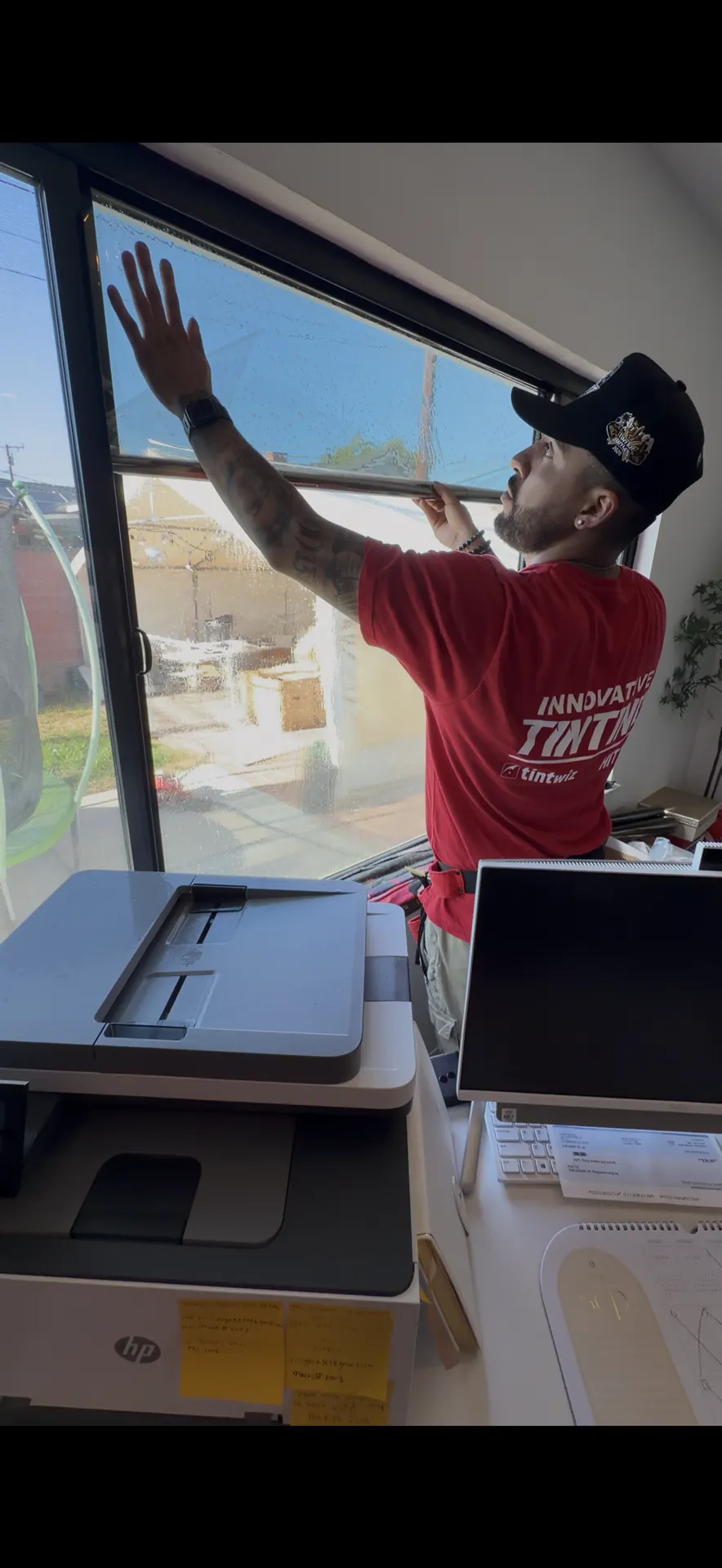
Genuine Fresh Off The Lot photo spotlights connected to this film category.
 Authorized XPEL VISION Dealer
XPEL VISION options: UV Protection
Published XPEL VISION families that relate to this goal. Each page shows documented options, master-sheet values and official specification sheets.
- Clear View CeramicLow-reflectance ceramic film for daylight and a natural look.3 options · Interior
- Clear View PlusHigh infrared rejection across four shades, from very light to dark.4 options · Interior
- DaylightNeutral shades for moderate glare and a calm, even look.2 options · Interior
- Exterior Clear PerformanceA light exterior film when the look must stay close to clear.1 option · Exterior
- Blister PreventionA clear barrier layer for acrylic or polycarbonate before another film.1 option · Conditional
These are published XPEL VISION products. We confirm availability, glass compatibility and the exact film in your estimate.
Further reading
Understand the glass before you choose
Get a straight answer and a real number.
Tell us the building, the elevation and the problem. We'll tell you what film makes sense — and what doesn't.